Calmô: data-driven creative strategy
challenge A DTC sleep gummy brand had a R$115 CPA against a R$95 target, with 78% of spend on a single angle. The audit showed that the angle was fatigued and that the account itself already pointed to four ways out. Those became four hypotheses, four briefs and three static ads for Meta. A practice exercise; no ad ever ran.
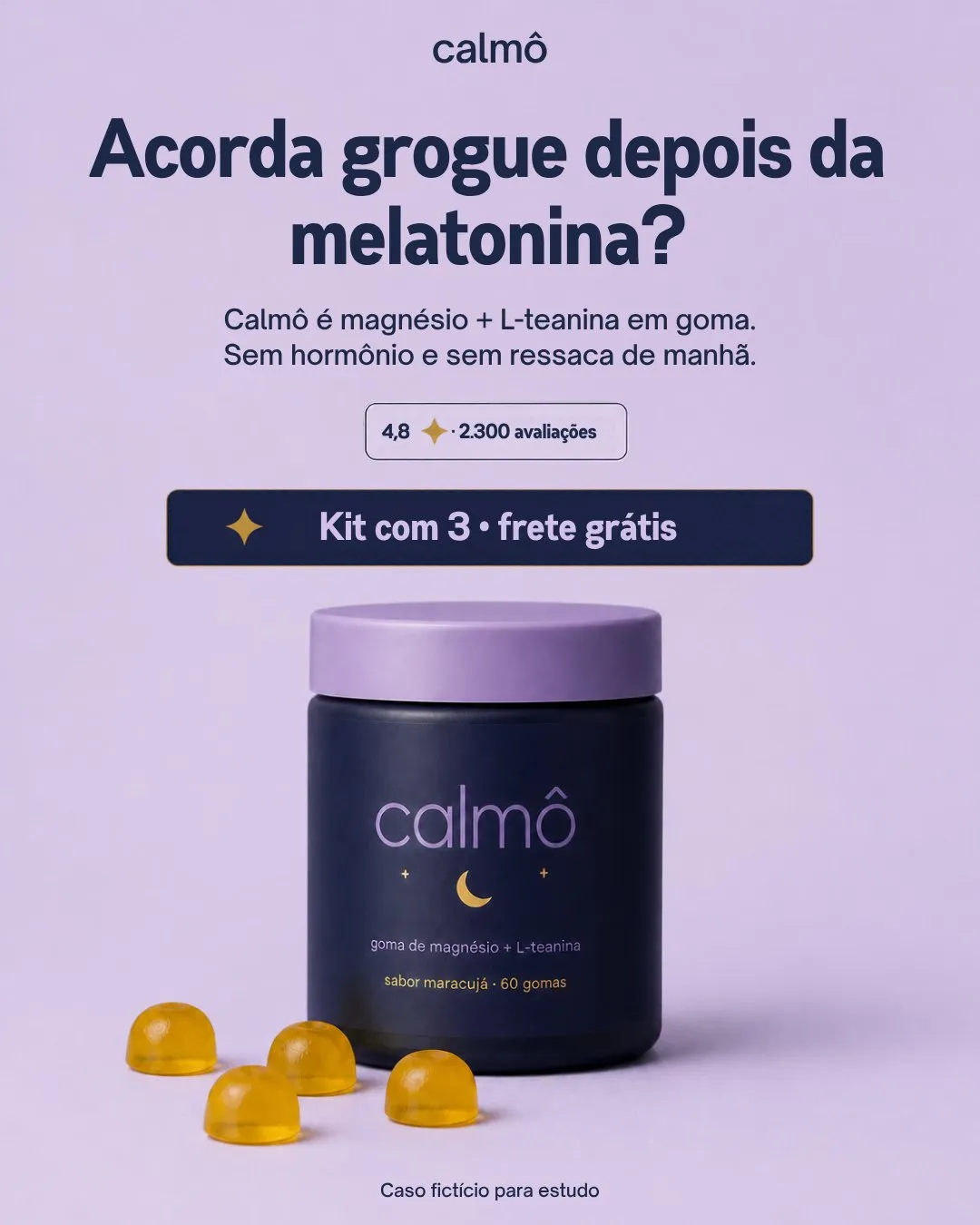
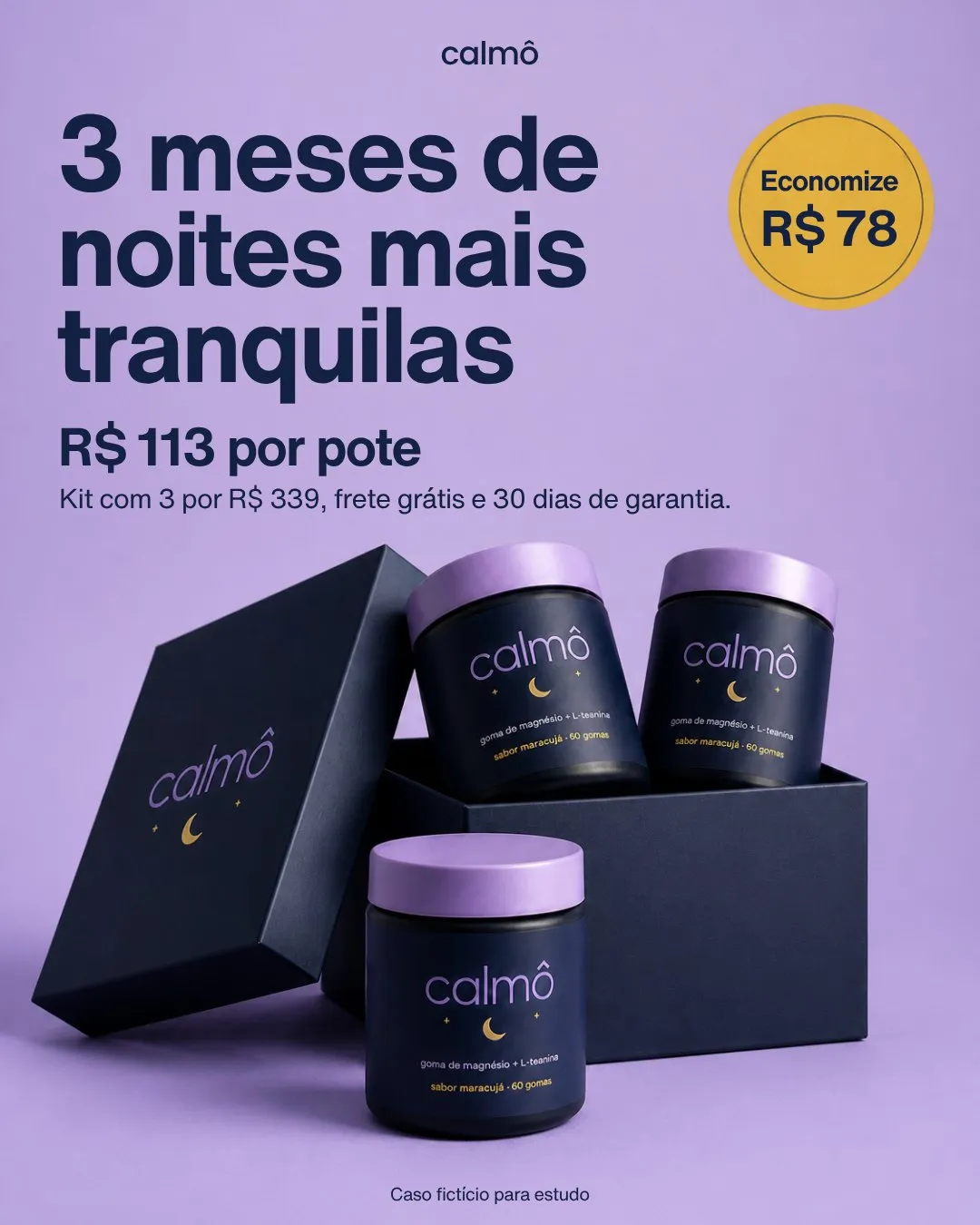
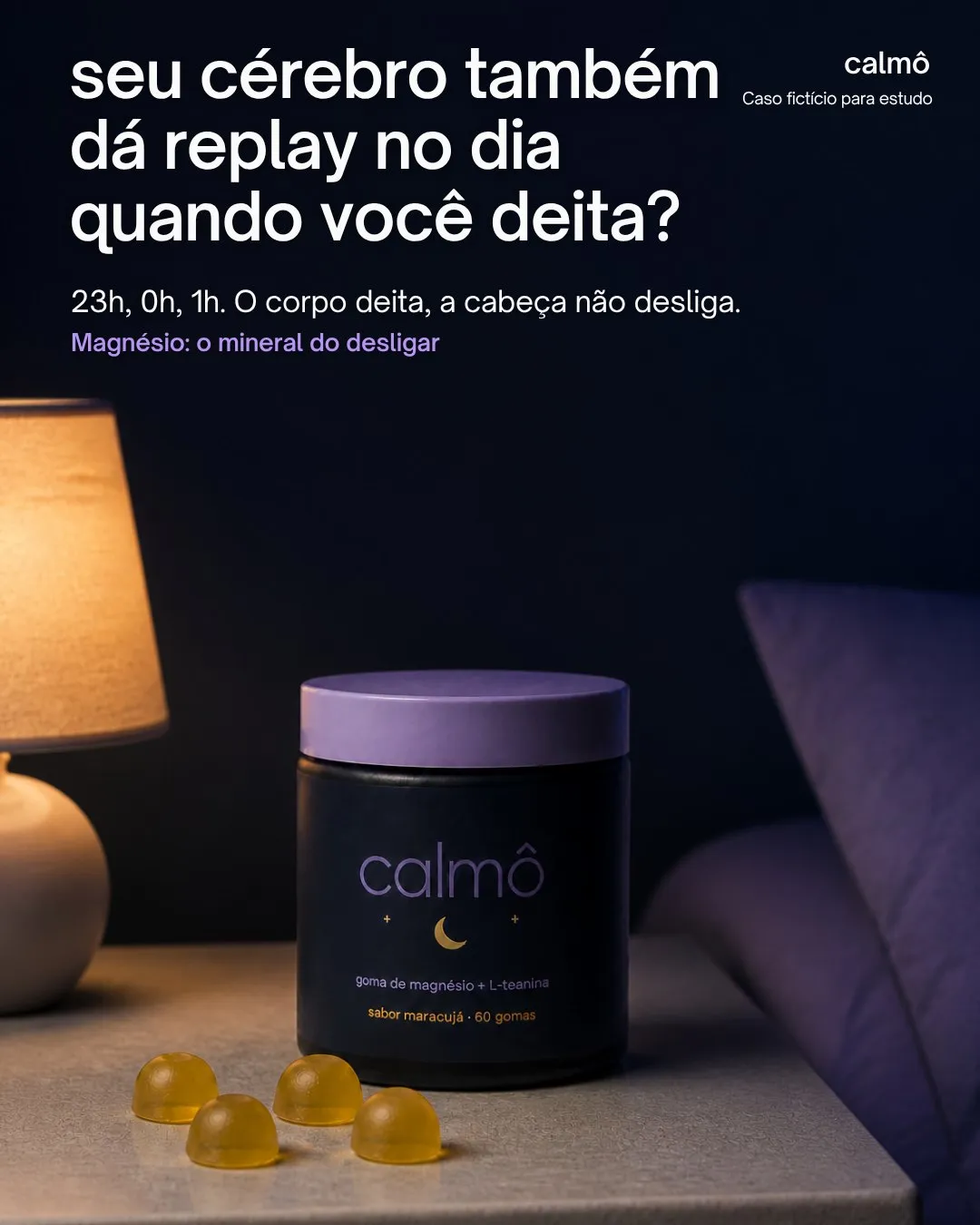
The three static ads (in Portuguese) · swipe sideways →
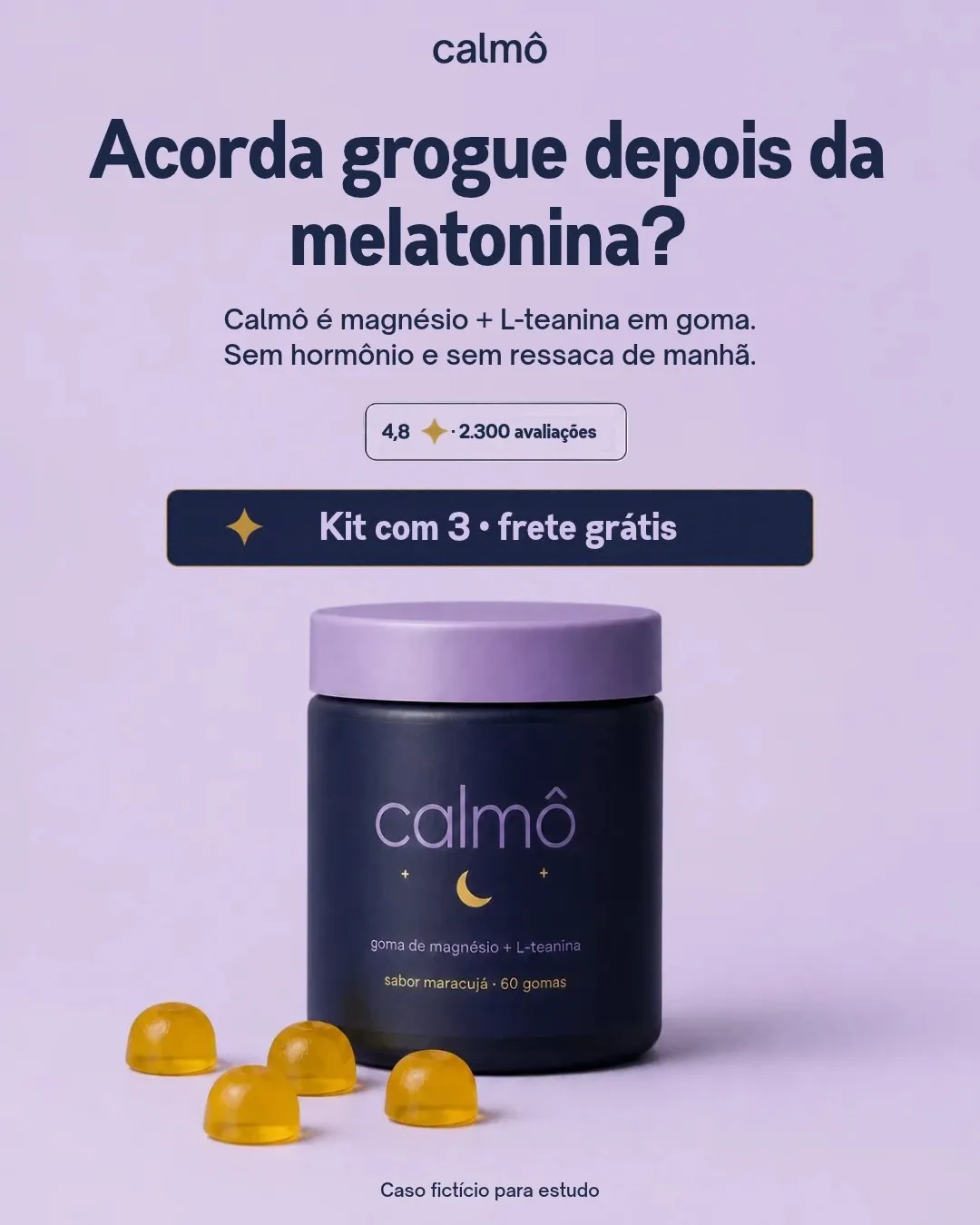
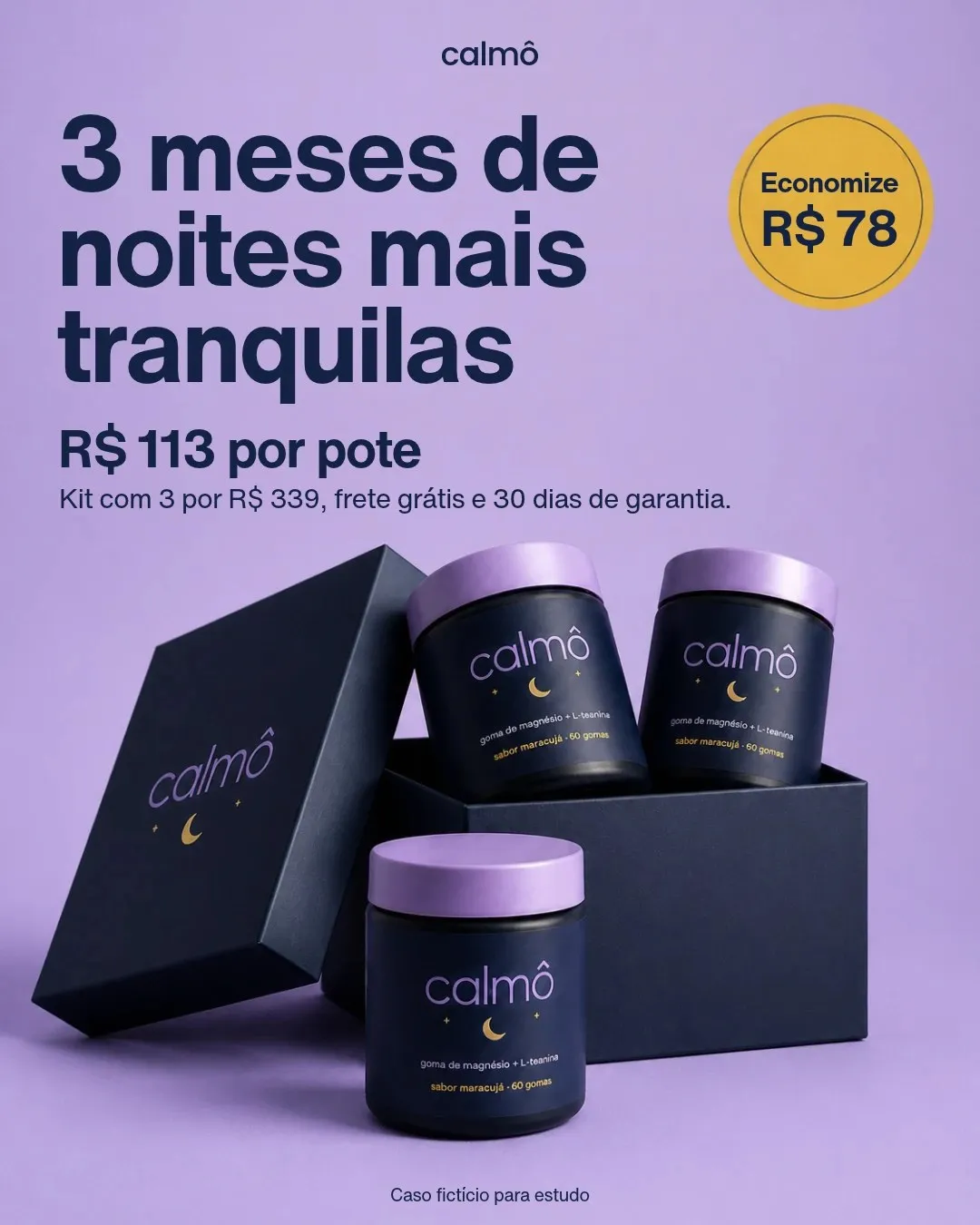
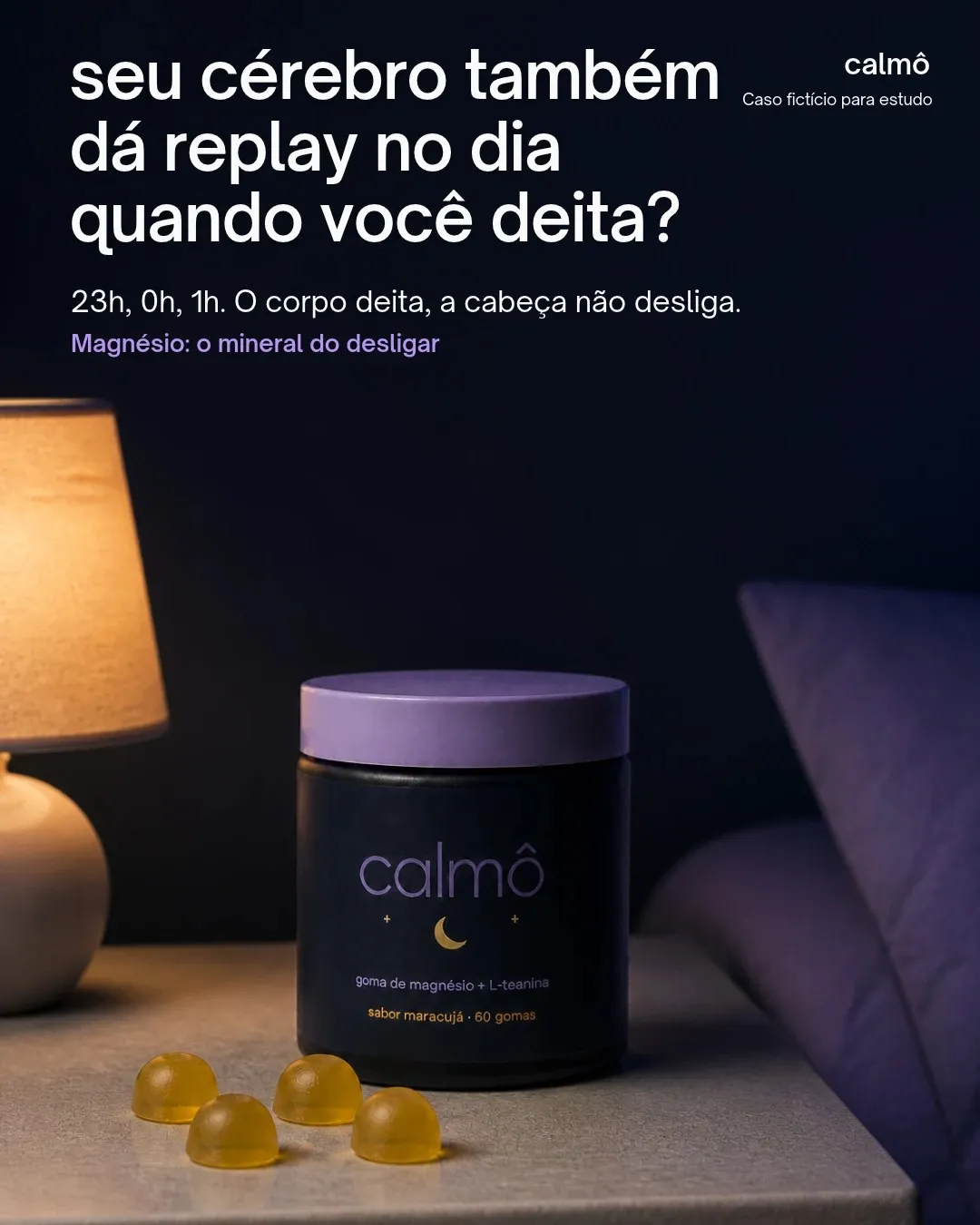
LinkedIn carousel for the case (in Portuguese) · 12 cards
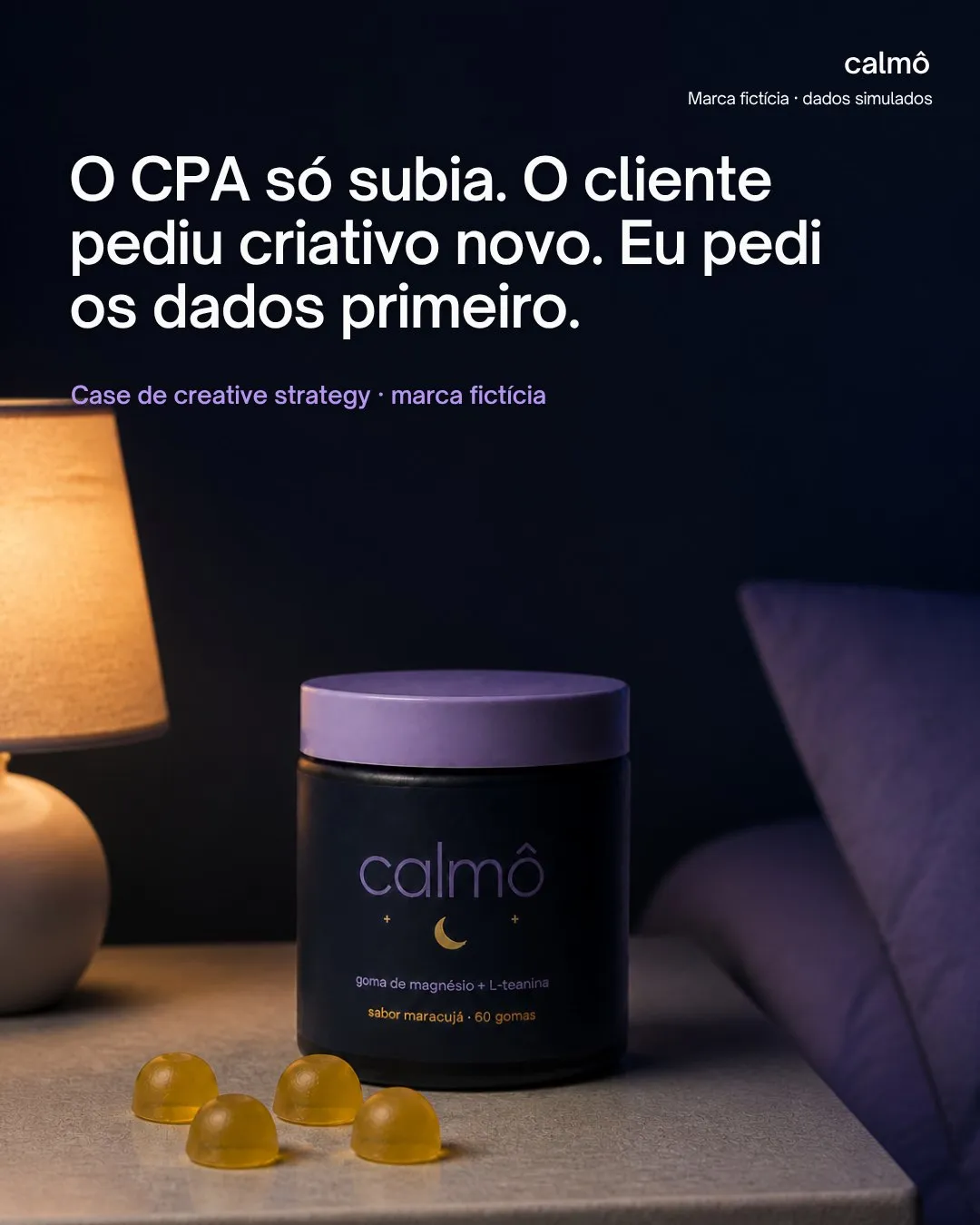
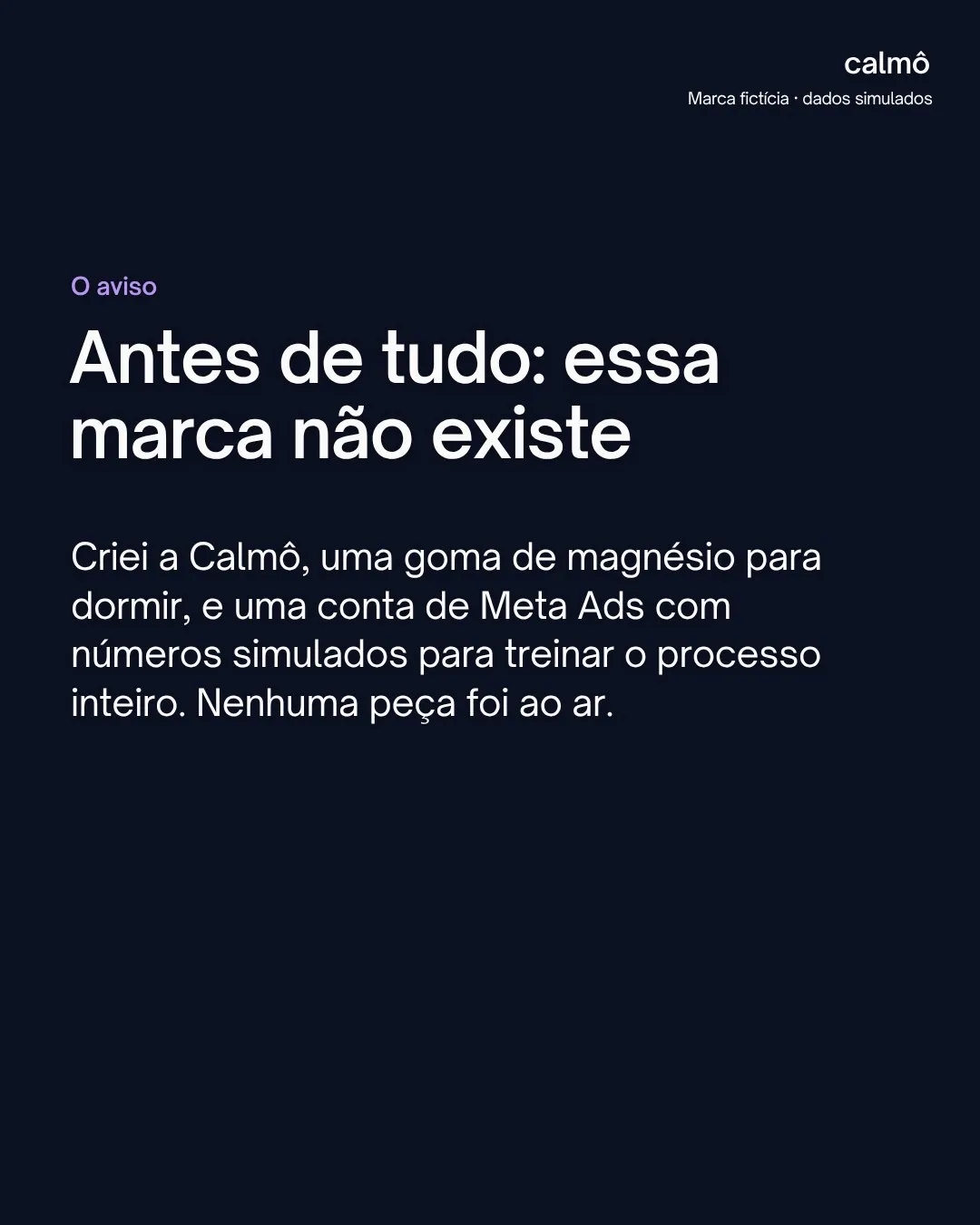
This is a practice exercise. Calmô, its ad account and the research were made up to practice the process, and no ad ever ran. It has no connection to any real company using this name.
My role: account audit, research, hypotheses, creative angles, briefs and art direction for the ads.
Channel: Meta Ads (Feed, Reels and Stories).
Deliverables: an audit told as a story, 4 hypotheses, 4 briefs with scripts and 3 static ads in 4:5.
1. Brand and context
Calmô sells a magnesium bisglycinate + L-theanine gummy, passion fruit flavor, only through its own website in Brazil. The brand is 14 months old and almost all revenue comes from Meta Ads. One jar costs R$139, and the 3-jar bundle is R$339 (R$113 each), with free shipping and a 30-day guarantee.
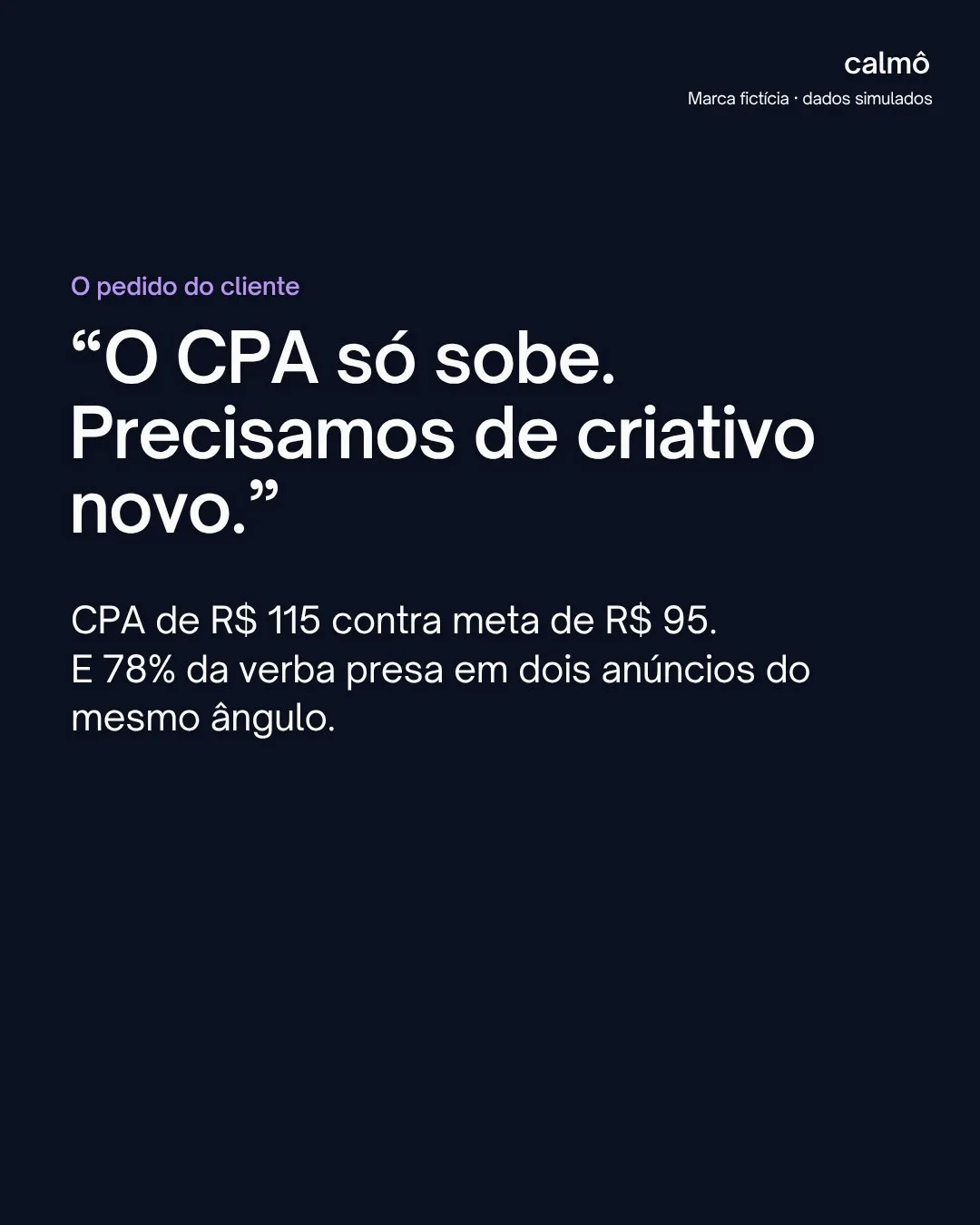
The request came in like this: "CPA keeps going up, we need new creative." The goal was to scale spend from R$80k to R$150k a month without going over a R$95 CPA.
2. Industry and audience
Wellness, sleep supplements. The direct competitor is the drugstore melatonin gummy, followed by "natural sleep" brands selling teas and capsules. The core audience is women aged 28 to 45 who work, have young kids and go to bed exhausted but can't switch off.
3. Insight
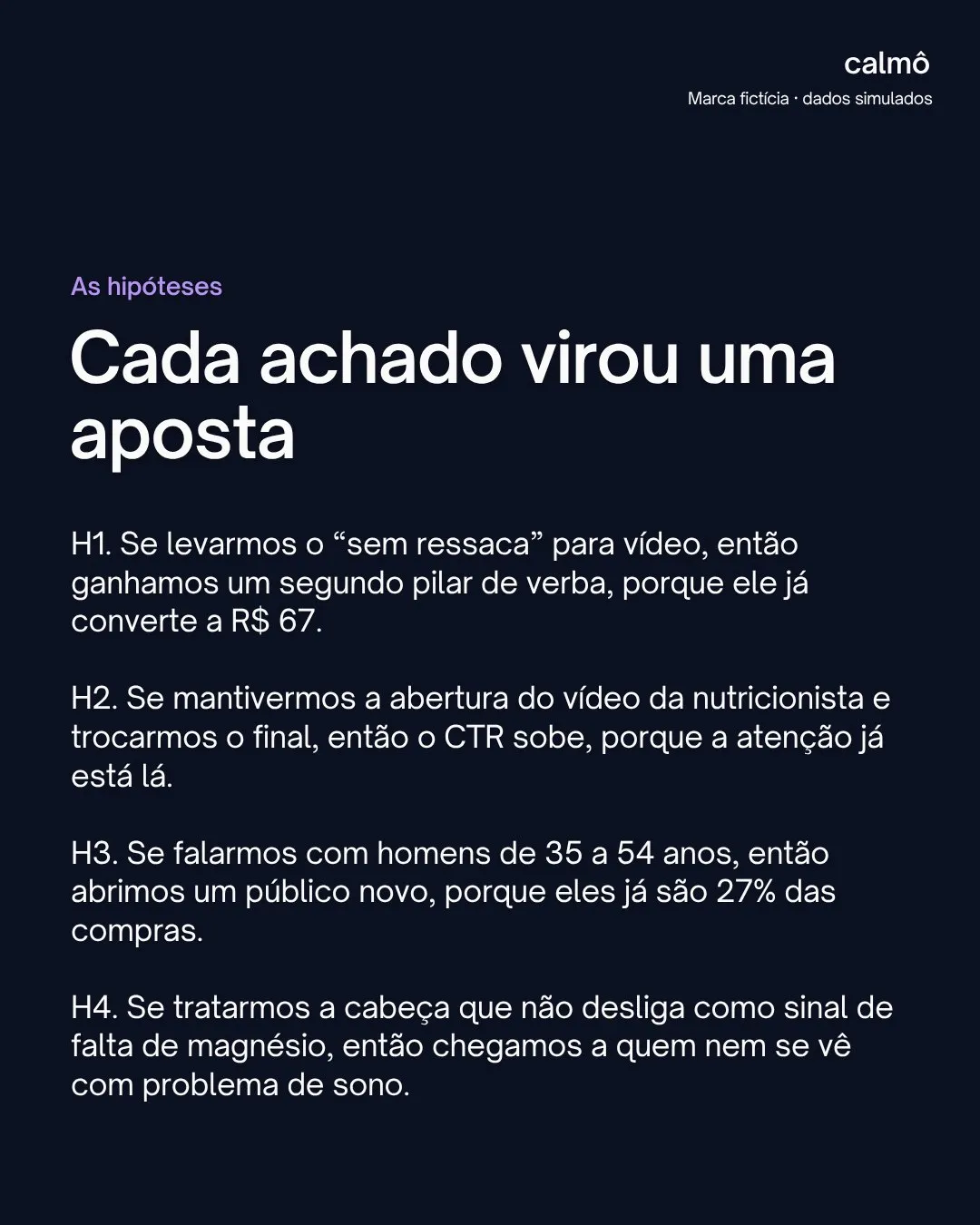
CPA was rising because the account relied on a single angle, and that angle was wearing out. Another version of the same testimonial wasn't going to fix it. The audit (simulated data, last 30 days) was presented to the client in four beats.
- Context. Twelve weeks earlier, two UGC testimonials about "waking up tired" were holding CPA at R$81.
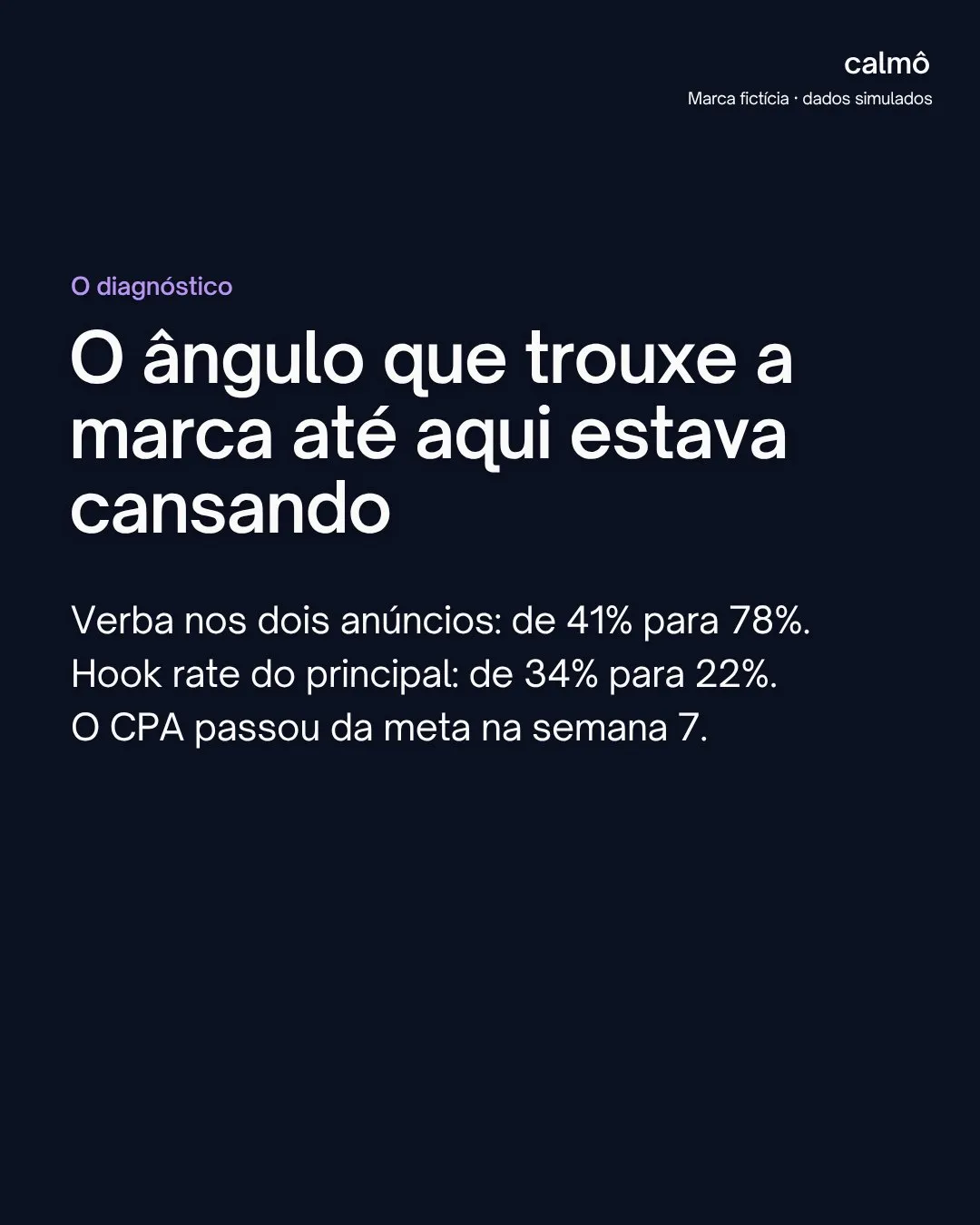
- Conflict. Spend on those two ads went from 41% to 78%. Hook rate on the top ad dropped from 34% to 22%, below the 28% baseline, and CPA went over target in week 7.
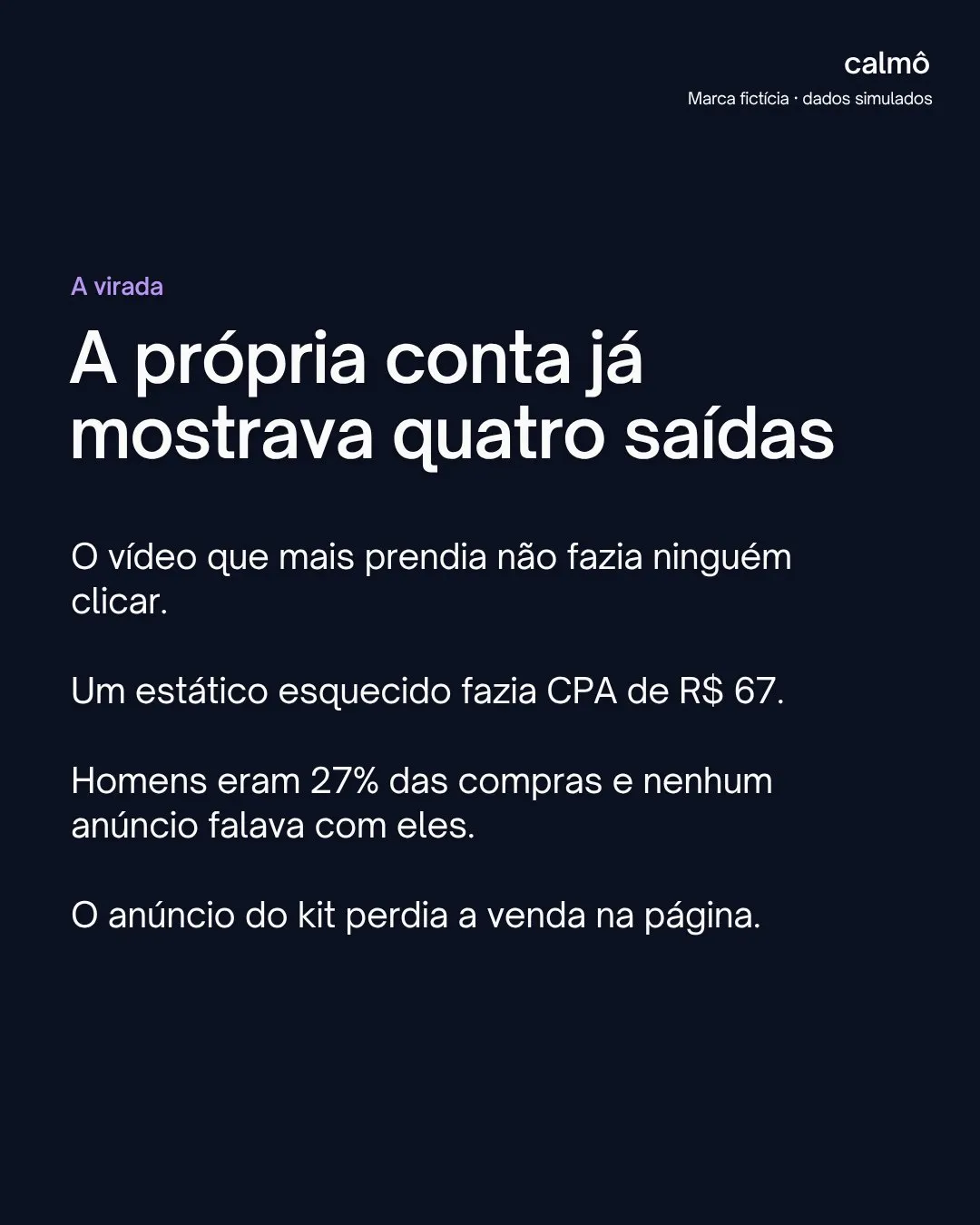
- Turning point. The account was already showing four ways out that nobody had connected:
- The nutritionist video held attention best (38% hook rate) but had a 0.6% CTR. People watched and didn't click.
- The "melatonin vs Calmô" static had a R$67 CPA on only R$3,400 of spend.
- Men aged 35 to 54 made up 27% of purchases from the best ad, and no creative spoke to them.
- The bundle ad had a 1.9% CTR and a 1.1% CVR, because the landing page only showed free shipping at checkout.
- Way out. Each finding became a hypothesis, tested in order of strength of evidence.
The simulated research backed up these signals. In competitor reviews, the most common complaint was "waking up groggy". In ad comments, the second most common question was "can men take it?". On Reddit and TikTok, people who can't sleep talk about "replaying the day in my head" and almost never say insomnia.
4. Hypotheses
Four creative bets, ranked from the strongest evidence (a signal inside the account) to the weakest (research only).
| # | If | Then | Because | Main metric |
|---|---|---|---|---|
| H1 | We take the "no morning grogginess" angle from the static into UGC video and new statics | The account gets a second spend pillar under a R$95 CPA | The static already converts at R$67, and "waking up groggy" is the top complaint about melatonin | CPA and spend Meta is willing to allocate |
| H2 | We keep the nutritionist video's opening and rewrite the ending with benefit, proof and offer | CTR rises from 0.6% toward 1.2% without losing hook rate | The attention is already there (38% hook rate); what's missing is the step to the click | CTR, with hook rate above 30% |
| H3 | We speak to men aged 35 to 54 about a mind that's still at work | We open an audience that already buys without being targeted | They're 27% of purchases and the second most common question in comments | CPA among men |
| H4 | We show "a brain that won't switch off" without mentioning insomnia | We reach people who don't see themselves as having a sleep problem | That's how the audience describes it, and the account had nothing for unaware buyers | Hook and hold rate, then CPA |
The bundle finding didn't become a creative. It went to the growth team as a recommendation: repeat the free shipping message at the top of the landing page, matching the ad.
5. Execution
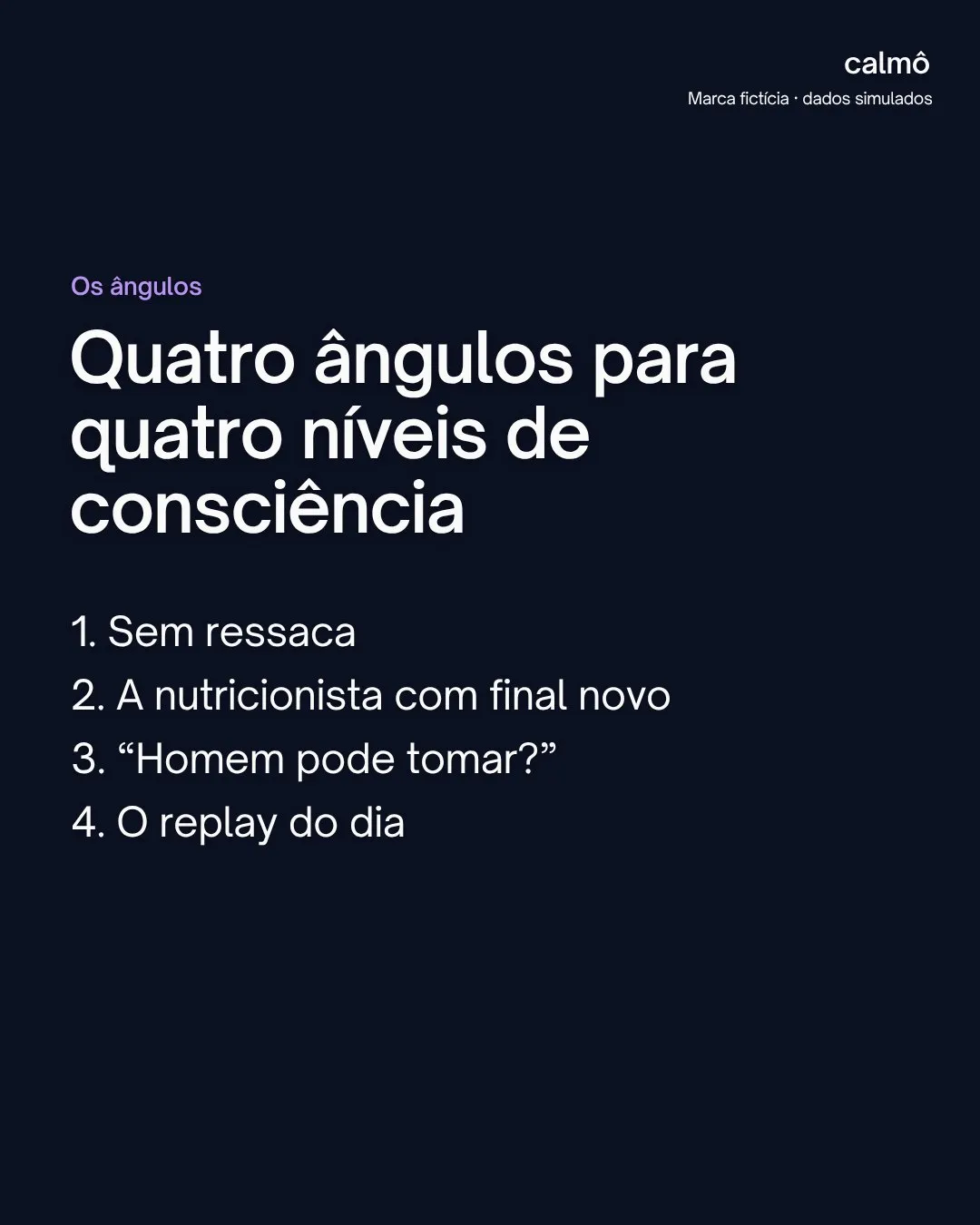
Each hypothesis became an angle for a different awareness level, with a full brief and a scene-by-scene script.
| Hypothesis | Angle | Awareness level | Format | Test budget |
|---|---|---|---|---|
| H1 | Wake up without the grogginess | Solution aware | Comparison UGC + static | 35% |
| H2 | The nutritionist, with an ending that sells | Problem aware | Iteration of the expert video | 25% |
| H3 | "Can men take it?" | Problem aware | UGC comment reply | 25% |
| H4 | Replaying the day | Unaware | B-roll + voiceover + static | 15% |
The three static ads were finished in Canva in 4:5 for the feed. The copy is in Portuguese because the brand is Brazilian.
No grogginess (H1). Takes the angle that was already converting into a product layout, with the competitor's weak spot in the headline and social proof right below. Headline: "Wake up groggy after melatonin?"
Bundle offer. A bottom-of-funnel ad that supports all three angles. It leads with the price per jar, R$113, rather than the total. Headline: "3 months of calmer nights."
Replaying the day (H4). Uses the audience's own words as the hook and only introduces the product after naming the problem. Headline: "Does your brain replay the day when you go to bed too?"
6. Expected results
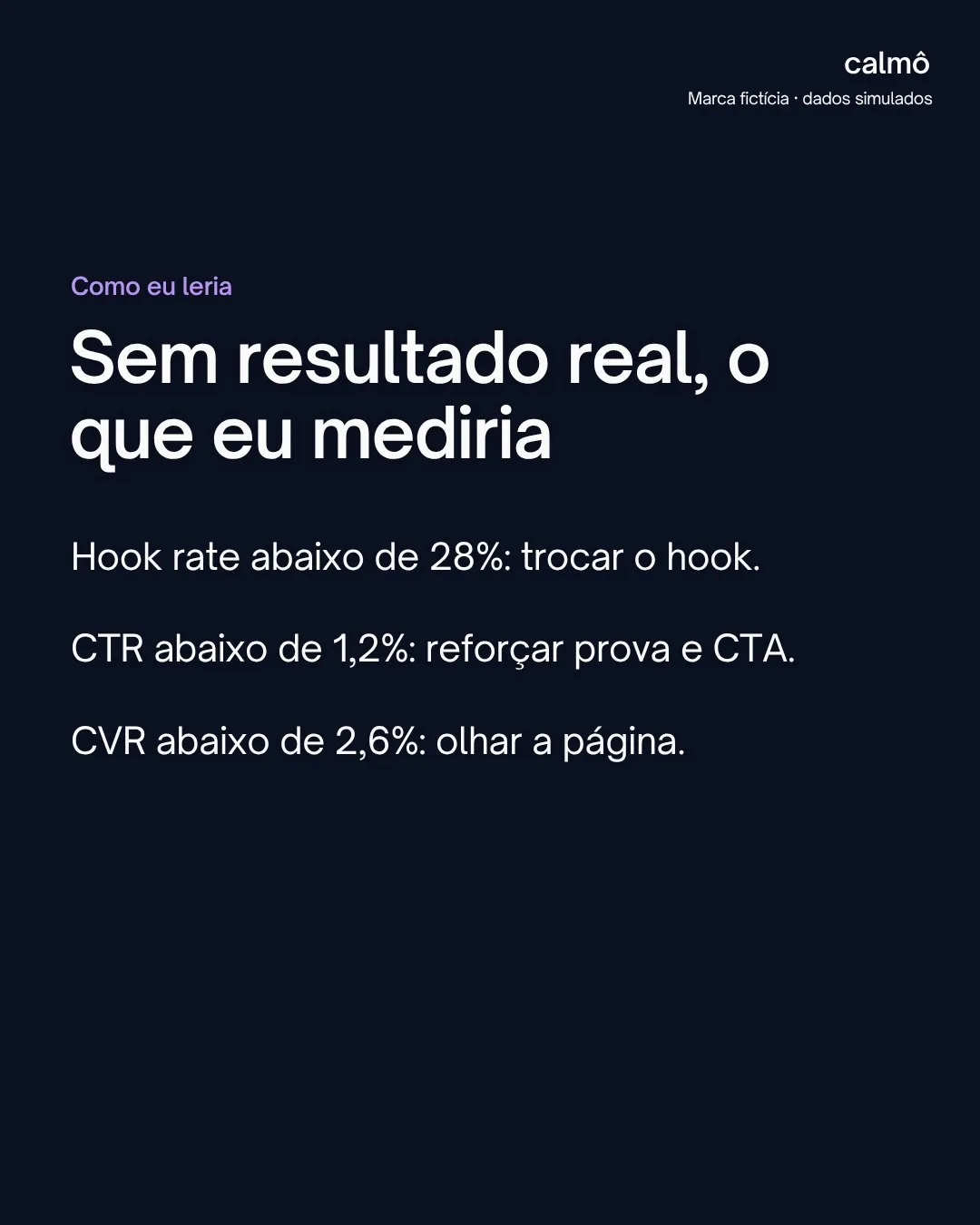
Since nothing ran, there are no real results. Each ad would be read against the account baseline (28% hook rate, 22% hold rate, 1.2% CTR, 2.6% CVR), and the business question is whether it holds CPA under R$95 at higher spend.
| If this happens | The diagnosis says | Next iteration |
|---|---|---|
| Hook rate below 28% | People didn't stop | Test a new hook with the same body |
| Good hook, hold rate below 22% | They stopped and dropped off | Find the second they leave and cut it |
| Good hold, CTR below 1.2% | They watched and didn't click | Strengthen benefit, proof and CTA |
| Good CTR, CVR below 2.6% | They clicked and didn't buy | Check that the landing page repeats the ad's offer |
My bet is that H1 and H2 respond first, since they already have a signal inside the account. H4 should start with the highest CPA, because unaware buyers take longer to purchase, but it's the only one that opens a new audience.
7. Next steps
- Run the four angles with the budget split above and log each test with hypothesis, date, result and learning.
- If H1 on video beats the static, turn the best UGC clips into partnership ads.
- If H3 brings a good CPA among men, start a series of comment replies answering other questions from the comments, such as "is it habit-forming?".
- Before running anything for real, check the health claims with regulatory, because of Anvisa's rules for supplements in Brazil.